
Social media has today become the number one channel brands turn to in order to reach their audience and build a direct relationship with them, since most purchase decisions are now influenced by what users see on Facebook, Instagram, and TikTok even before they open a search engine at all. The numbers confirm this clearly, as about 63.9% of the world’s population uses social media, with a daily usage rate exceeding two hours, making it a massive marketing opportunity no brand can afford to ignore.
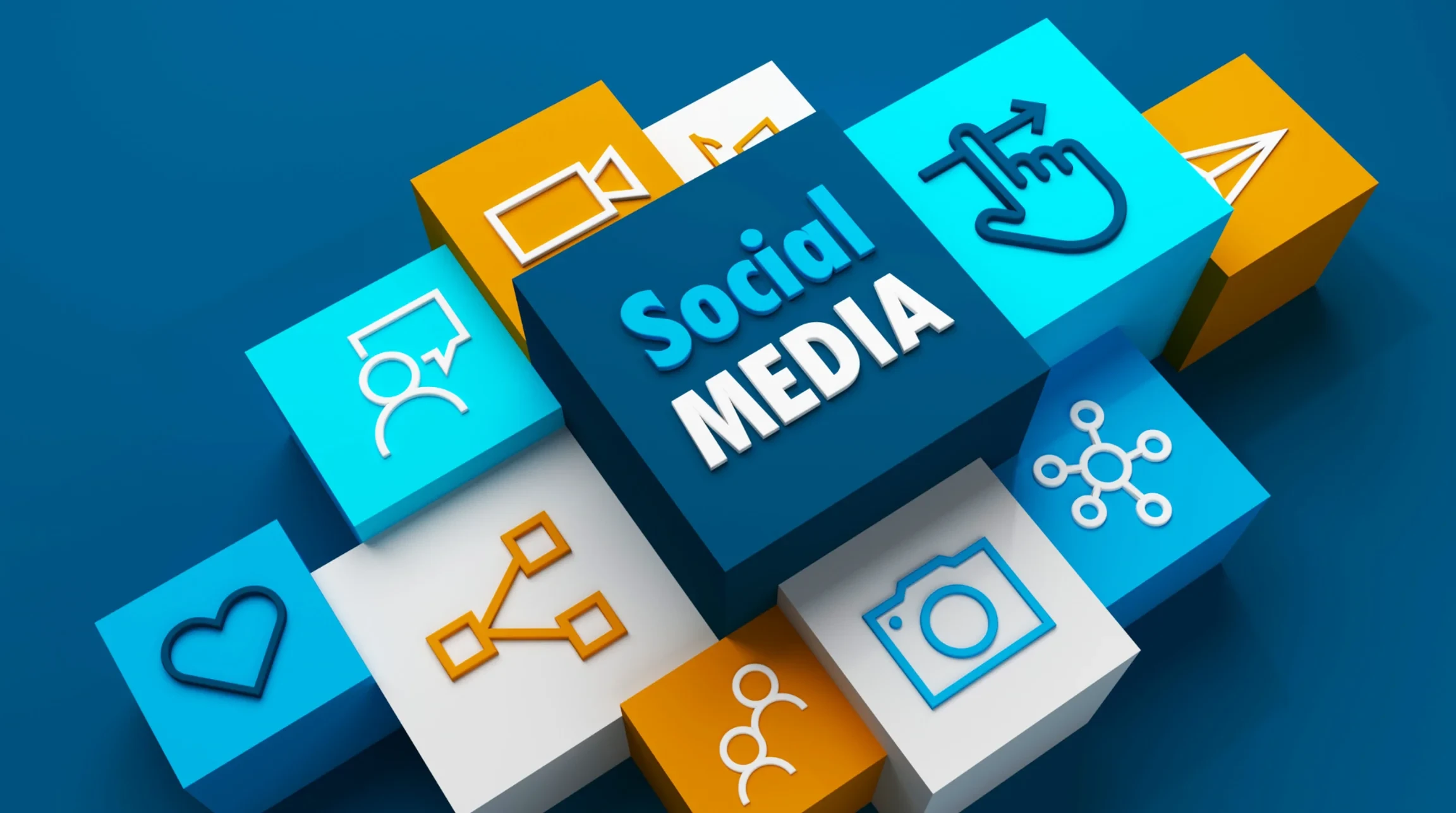
In this comprehensive guide, you’ll learn the meaning of digital marketing through social media, its history, its most important platforms, the types of content suited to it, and how to set up successful ads, along with practical steps and real tools for success, without overlooking the challenges you need to watch out for. Whether you’re a small business owner or a marketing manager at a large company, this article will give you a complete roadmap for building a strong digital presence across various social media platforms.
The Meaning of Digital Marketing
Digital marketing is the use of digital channels, websites, search engines, email, and social media platforms to promote products and services and reach potential customers. It differs from traditional marketing in its ability to target precisely and measure results instantly; instead of a TV ad reaching a general audience, digital marketing lets you target a specific age group in a specific geographic area with specific interests.
The Difference Between Digital Marketing and Traditional Marketing
One of the important topics you need to understand as a marketer or business owner is the difference between marketing your business traditionally versus digitally. Traditional marketing, simply put, relies on tools like printed flyers or television to promote a business, while digital marketing shows up when you enter the online world, like Facebook, Instagram, and a website.
The outcome of either traditional or digital marketing, in every case, shows up in the results of advertising campaigns: Did we reach new customer segments? Did we reach other regions? Or are our customers still from the same area? Let’s take an example here to explain in detail.
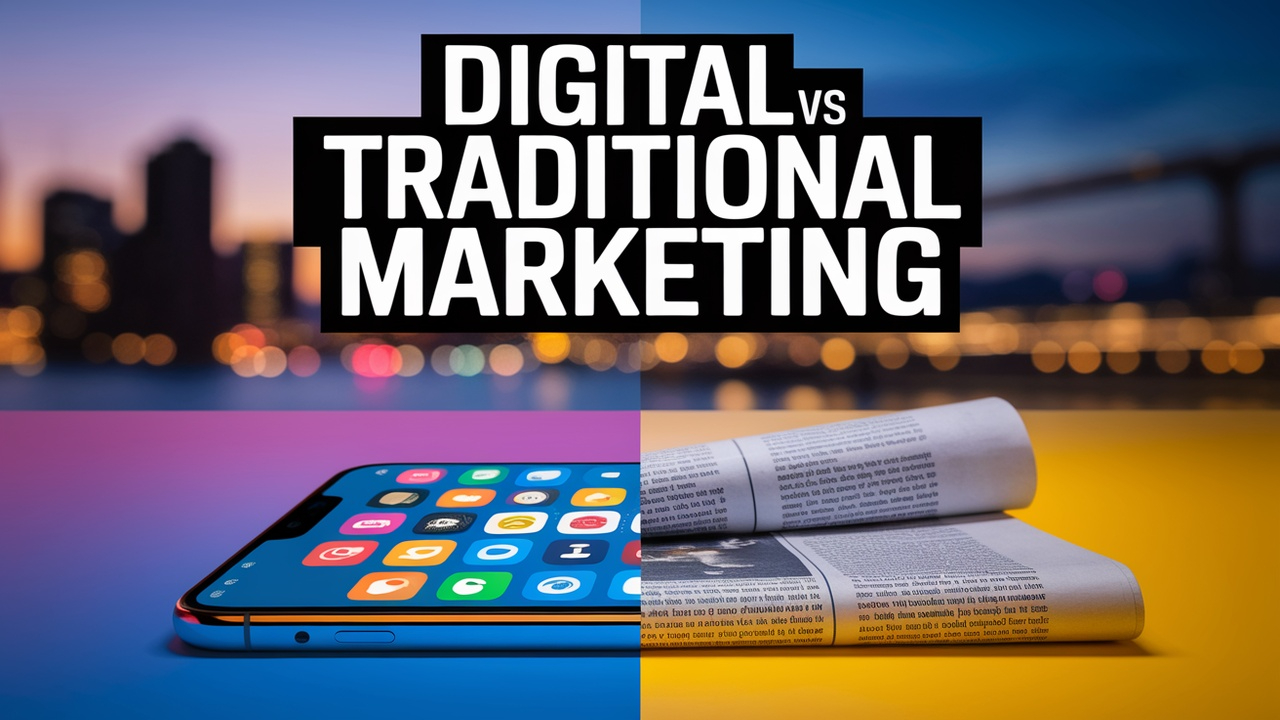
Imagine a supermarket whose owner, at one point, relied on word of mouth and paper flyers distributed around the neighborhood—a completely traditional marketing approach. Then he suddenly decided to open a Facebook page for his store and started promoting his products through it. Here, the store owner will start receiving new customers, whether from entirely new customer segments or through other sales channels, such as product delivery.
The Relationship Between Digital Marketing and Social Media
Social media marketing is considered one of the most important and widespread branches of digital marketing because it combines content, paid ads, and direct audience engagement in one place. When you manage professional accounts for your brand on platforms like Facebook, Instagram, and LinkedIn, you’re effectively practicing an integrated form of digital marketing that combines brand building with achieving direct sales.

Social media is generally one of the fastest-growing digital marketing channels overall because most of today’s audience spends very long periods in front of mobile phone screens, and with younger generations, you find that most of this time is spent on social media in a never-ending journey of doom scrolling. Here, we position ourselves in their path so we can capture them as potential customers by appearing in ads relevant to them.
The Difference Between Social Media and SEO: Organic vs. Paid Traffic and Each Channel’s Priorities
Many business owners treat social media and SEO as if they were the same tool, while the truth is that they are two completely different channels in how they work, in the timing of results, and in the type of customer each channel attracts. SEO builds your presence on search engines like Google and focuses on those who are already searching for you or for a solution to their problem, while social media builds your direct relationship with your audience on platforms like Facebook, Instagram, and TikTok and creates new demand among people who weren’t searching for you in the first place.
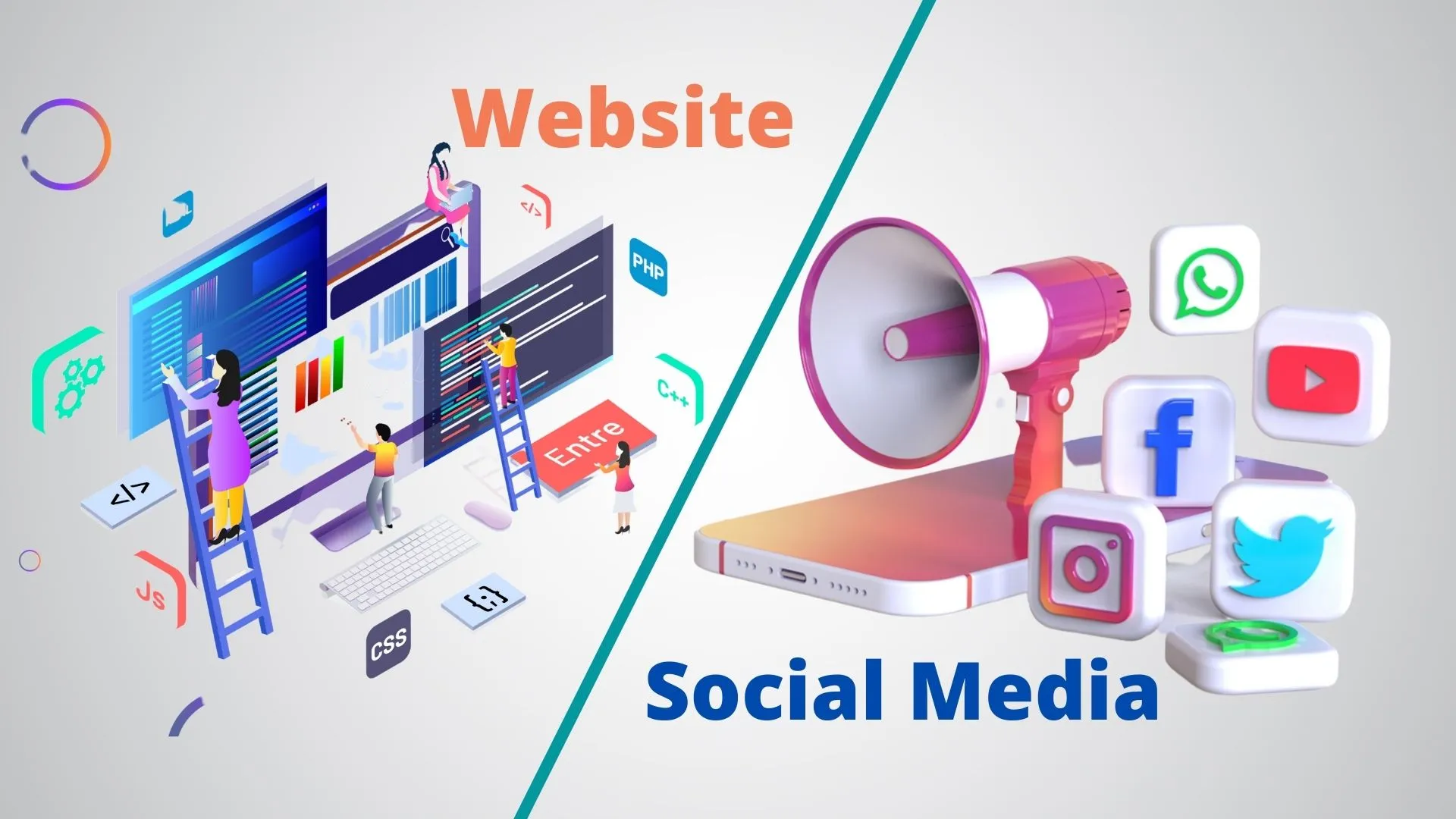
Understanding this difference is the first step toward allocating your budget correctly between the two channels, instead of spending randomly on ads or content that doesn’t serve your actual goal.
Organic Traffic in SEO vs. Social Media
First: Organic Traffic in SEO (Organic Search)
Organic traffic from SEO is traffic that comes to you from free Google search results, without any direct ad spend. This type of traffic takes time to build (usually 4 to 6 months before strong results start to appear), but it is characterized by:
- Greater long-term stability if you maintain the quality of your site and content.
- Scalability over time as you publish more content and target new keywords.
- A clear connection to the user’s search intent, meaning the person is actively searching for your product, service, or a solution to a specific problem.
Building this type of traffic depends on four key factors:
- Keyword optimization: Choosing the right search terms with good search volume that express the customer’s intent, then distributing them across titles, descriptions, and the content itself.
- Content quality: Providing content that genuinely answers the customer’s questions, solves their problem, and deserves to rank, not just keyword stuffing.
- Site speed and user experience: Fast, easy-to-navigate, mobile-responsive pages, because any delay or poor experience reduces ranking chances.
- Internal and external links: Linking pages to each other within the site and earning backlinks from trusted external sites to boost search engines’ trust in your site.
That’s why an SEO customer is considered a strong customer: they come to you of their own will because they’re searching for a solution, not because you interrupted their scrolling with a sudden ad.
Second: Organic Traffic on Social Media (Organic Social)
Organic traffic from social media is any interaction or visits that come from your posts and videos without paid promotion. This traffic depends on:
- The platform’s algorithm (Facebook, Instagram, and TikTok) distributes content.
- The strength of engagement (comments, likes, shares, saves).
- How much the audience shares the content with their friends (shares).
In recent years, organic reach on platforms like Facebook and Instagram has dropped significantly, and it has become normal for a post to reach only a very small percentage of followers, which makes relying solely on organic reach in social media a limited-impact approach unless you’re producing extremely strong, highly engaging content.
The Fundamental Difference Between the Two Types of Organic Traffic
Organic traffic from SEO reflects existing demand from the user (search intent) because the person consciously typed a specific search query. Organic traffic from social media, on the other hand, is usually about creating new demand in a user who wasn’t thinking about your product but was drawn in by the content you presented.
The key rule here: An SEO customer searches for you, while a social media customer is usually someone you appear to first. That’s why SEO customers are typically closer to conversion, but social media customers are your opportunity to build a long-term relationship with the audience and nurture them with content until they’re ready to buy.
Paid Traffic: Search Ads vs. Social Media Ads
First: Search Ads (Google Ads)
Google Search Ads target users with clear intent (high intent) because they type search queries like “nursery in Basatin,” “beauty center in Cairo,” or “online digital marketing courses.” This means:
- Conversion rates are usually higher because the person is ready to take a step (ask, book, buy).
- Cost per click (CPC) may be higher in competitive sectors, but it’s often offset by the value of the acquired customer.
- Ad results appear instantly once the campaign is launched, but stop as soon as the budget is paused.
Second: Social Media Ads (Facebook, Instagram, TikTok Ads)
Social media ads rely on targeting audiences based on the following:
- Interests (e.g., mothers, fashion, beauty, education, cooking).
- Age, gender, and geographic location.
- Behaviors and previous interaction (who watched your videos, who visited your site, who engaged with your account).
That’s why these ads are used effectively for the following:
- Awareness stage: Introducing new audiences to the brand and its offers.
- Retargeting: Targeting people who visited the site or engaged with the content but didn’t complete the purchase step.
Speed and Control in Both Channels
Both search ads and social media ads give you:
- Fast results compared to organic channels alone.
- Precise control over daily or total budget.
- Flexibility to pause and launch campaigns and to test different messages and audiences.
The difference is that the impact of search ads is directly tied to your spending; as soon as the budget stops, visibility stops. Meanwhile, some of the impact of social media ads (like increased awareness, account follows, and saved content) continues for a while after the campaign ends, because the brand has become present in the audience’s mind and its content is saved by them.
How to Smartly Combine SEO and Social Media
Companies looking for fast and sustained sales results don’t pick one channel and abandon the other but rather combine the following:
- An SEO strategy to build long-term presence in search results and attract customers with clear intent.
- A social media strategy to build a strong relationship with the audience, create new demand, and boost trust.
- Search ads directed at high-intent keywords.
- Social media ads for awareness and retargeting, connecting all of this to landing pages and a website ready for conversion.
Here’s where partnering with a specialized agency that combines social media marketing with website optimization for SEO and ad management comes in, so every channel moves toward a single goal: increasing actual customers, not just numbers on a screen. Companies wanting fast sales results usually combine paid search ads and social media ads together.
The Key SEO Priorities to Focus On
- Keyword Research: Knowing exactly what your audience is searching for, using the same words they use.
- Technical SEO: Site loading speed, link structure, and compatibility with search engines and mobile devices.
- On-page SEO: Titles, meta descriptions, and naturally distributing keywords within the content.
- Backlinks: Earning links from trusted sites to boost your site’s authority with Google.
- Topical Authority: Covering a specific topic in depth through interlinked articles to become a reference in your field.
The Key Social Media Priorities to Focus On
- Visual content identity: Consistency of colors, design, and tone across all posts to boost brand recognition.
- Engagement Rate: Likes, comments, and shares as a direct measure of the health of the audience relationship.
- Speed of audience interaction: Fast responses to comments and messages to build genuine trust.
- Content format diversity: Using video, images, and stories to fit each platform and its audience behavior.
- Community Building: Turning followers into a loyal audience that shares their experience with the brand (user-generated content).
Quick Comparison Table Between SEO and Social Media
| Aspect | SEO | Social Media |
|---|---|---|
| Type of demand | Captures existing demand (Search Intent) | Creates new demand (Demand Generation) |
| Speed of results | Relatively slow (months), but cumulative and stable | Relatively fast, especially with viral content or ads |
| Organic traffic | From organic Google search results | From posts spreading without paid promotion |
| Paid traffic | Google Ads based on search intent | Facebook/Instagram/TikTok Ads based on interests |
| Primary goal | Direct conversions from ready-to-buy customers | Brand awareness, engagement, and relationship building |
The practical takeaway is that SEO and social media don’t compete; they complement each other: social media introduces the audience to your brand and drives them to search for it, while SEO ensures that when they do search for you, they find you at the top of Google’s results. That’s why we always connect content creation services with website design and development services within one integrated strategy for Tiye Solutions clients, ensuring that every social media effort actually translates into better site rankings and SEO results.
When Did Social Media Marketing Begin
The first social media platforms appeared in the late 1990s, but marketing through these platforms in its currently recognized form actually began to take shape with the launch of Facebook in 2004 and its commercial expansion after 2007, when the platform first offered business pages and paid ads. Other platforms followed: Twitter in 2006, Instagram in 2010, then LinkedIn, which had existed since 2003 but later evolved into a powerful B2B marketing tool. As for TikTok, it completely changed the rules of the game since its global launch in 2018.
Today, more than 5.1 billion people worldwide spend time daily on social media platforms, at a rate exceeding 3 hours a day in the Arab world alone, making it fertile, indispensable ground for any modern digital marketing strategy.
The Importance of Marketing Through Social Media
Social media is no longer just a space for entertainment or daily content sharing; it has become an influential marketing channel that helps companies build brand awareness, attract potential customers, and directly support purchase decisions. This channel’s importance grows as the global user base expands; recent data indicates that the number of social media users exceeded 5 billion in 2025, making it one of the largest digital environments brands can reach.
Why Has Social Media Become an Essential Marketing Asset?
Because today’s customer doesn’t just see an ad; they search, compare, read experiences, then make their decision. Market reports clearly show that social media influences purchasing behavior, and it also helps companies increase visibility, boost traffic, generate leads, and improve long-term sales chances.
According to a Businesswire report, 82% of consumers trust recommendations from friends and close contacts on social media channels, which opens up an entire marketing avenue you can leverage to increase your profits and sales.
Reaching a Wide and Active Audience
One of the most powerful advantages of social media marketing is the ability to reach a very large audience in a short time and at a lower cost than traditional channels. With billions of users worldwide, social platforms become an ideal environment for publishing content, building brand awareness, and attracting new customer segments.
Influencing the Purchase Decision
The content users see on social media isn’t limited to entertainment; it directly enters the research and comparison stage before purchase. Recent research indicates that exposure to social content is clearly linked to influencing consumer behavior and purchase intent, especially when the content is authentic, useful, and relies on social proof and real experiences. That’s why professional content creation is an essential element in any social media marketing plan, as it turns pages from a mere digital presence into a source of trust and inspiration for purchase decisions.
Building Trust and Establishing the Brand
Regularly publishing educational content, customer experiences, and quick responses to inquiries helps build a professional brand image. Data shows that among the most notable benefits of social media marketing are increased visibility, higher traffic, and improved audience engagement elements that directly affect trust and credibility. This is where having a strong brand identity consistent with your messaging, posts, and designs matters, so the audience easily recognizes you every time they interact with your content.
Supporting Sales and Promotional Offers
Social media isn’t just for building awareness; it’s also an effective channel for moving offers, discounts, and new launches and for retargeting interested audiences. With features like direct messaging, trackable links, and targeted ads, platforms become a practical tool for converting interest into actual demand. These capabilities can be leveraged through professional digital advertising campaign management, ensuring your ad budget turns into tangible results in the form of visits, inquiries, and real sales.
Reducing Marketing Costs Compared to Traditional Methods
One of the top reasons companies rely on social media marketing is that it allows reaching precise audience segments with flexible budgets instead of spending heavily on a general audience that may not even be interested in the service or product. The power of targeting and performance control also makes spending more efficient and measurable. Combining this with market research and analysis makes investment decisions in ads and content based on real data rather than guesswork, which clearly raises the return on marketing spend.
The Importance of Professional Account Management
With growing digital competition in sectors like fashion, kitchens, nurseries, and beauty centers, having active accounts is no longer enough. What matters most is managing content strategically, considering visual identity, tone of voice, posting timing, performance optimization, responses, and continuous results analysis. That’s why many brands turn to specialized social media management companies to ensure every post and every campaign serves a clear purpose within the digital growth plan.
What Distinguishes Professional Management?
Professional management doesn’t just focus on the number of posts; it focuses on message quality, targeting precision, clarity of the call to action, and connecting content to a clear business goal such as increasing awareness, orders, bookings, or website visits. This is what turns social media from a routine daily activity into a marketing asset that adds real value to the business, and when this management is combined with a professionally designed website and other channels like online stores and SEO, the brand gains an integrated digital ecosystem that works in harmony to produce results.
How Can Social Media Be Used Smartly?
- Producing content that benefits the audience before selling to them, achieved through a strategic partnership with content creation experts who understand the end customer’s needs and the nature of each platform.
- Using social proof such as customer reviews and real experiences, highlighting these stories through professional photo and video shooting that reflects the quality of the service or product and gives the audience a sense of credibility.
- Leveraging paid ads to precisely reach the right audience through ad campaign management and continuous results analysis to fine-tune targeting and budgets.
- Responding quickly to messages and comments to improve trust and conversion rate, an essential part of social media management packages that focus on daily audience engagement.
- Connecting accounts to a clear goal such as visits, orders, bookings, or lead generation, directing the audience to landing pages or online stores designed to convert this interest into actual sales.
Top Social Media Platforms for Marketing
Choosing the right platforms is the cornerstone of any successful digital marketing plan, as each social media platform has a different nature and a distinct audience, and no single platform can be said to be the “best,” since the choice depends on the nature of the target audience and the company’s goals.
The largest social media platform in the world has over two billion monthly users, and it remains strong for targeting age groups from 30 to 55 thanks to advanced ad tools and a massive database on user behavior.
A visual platform par excellence, suited to products and services that rely on visual presentation such as fashion, food, decor, and beauty, offering powerful commercial tools like Instagram Shopping and Reels.
Unmatched in B2B marketing and ideal for reaching decision-makers and professionals and building strong professional relationships with business partners.
TikTok
The fastest-growing short video platform globally, targeting a broad age range from teenagers to those in their early forties, and it’s the ideal choice for building wide brand awareness.
X (formerly Twitter)
X is considered an effective platform for quick audience engagement and sharing news and promotional offers; it’s the platform where a large number of young people in Gulf regions spend a lot of time, a platform that helps you spend simple time reading short, simple posts or exchanges between users.
YouTube
YouTube is considered the second-largest social media platform in the world and is used to display long videos that boost audience engagement and increase their brand awareness in a detailed style; YouTube content isn’t easy content because it requires full commitment to be able to reach the best possible results.
| Platform | Target Audience | Best Content Type | Best For |
|---|---|---|---|
| 30-55 years | Images, video, text posts | Wide-reach paid ads | |
| 18-45 years | Images, Reels, stories | Visual products, fashion, beauty | |
| 25-55 years (professionals) | Professional content | B2B marketing | |
| TikTok | 16-40 years | Short creative videos | Building brand awareness |
| YouTube | 18-50 years | Long, educational videos | Detailed content and tutorials |
Types of Content on Social Media
There are many types of content that can be published on social media platforms, and the most suitable one differs depending on the nature of the business and the target audience.
- Videos: Allow companies to share ideas and stories in a visual, impactful way, and showcase products and services in a detailed style that improves customer understanding of them
- Images: A powerful and appealing way to display products visually, helping quickly capture the audience’s attention and reinforce brand identity
- Podcasts: Effective audio content that allows companies to share tips, ideas, and news and is also used to inform followers of offers and discounts directly
- Presentations: Used to present information in an organized, appealing way, and are a suitable tool for sharing company updates and achievements professionally
A Complete Social Media Marketing Guide: Steps to Build a Successful Strategy
Success in social media marketing doesn’t come randomly; it requires a well-thought-out strategy that goes through several key stages.
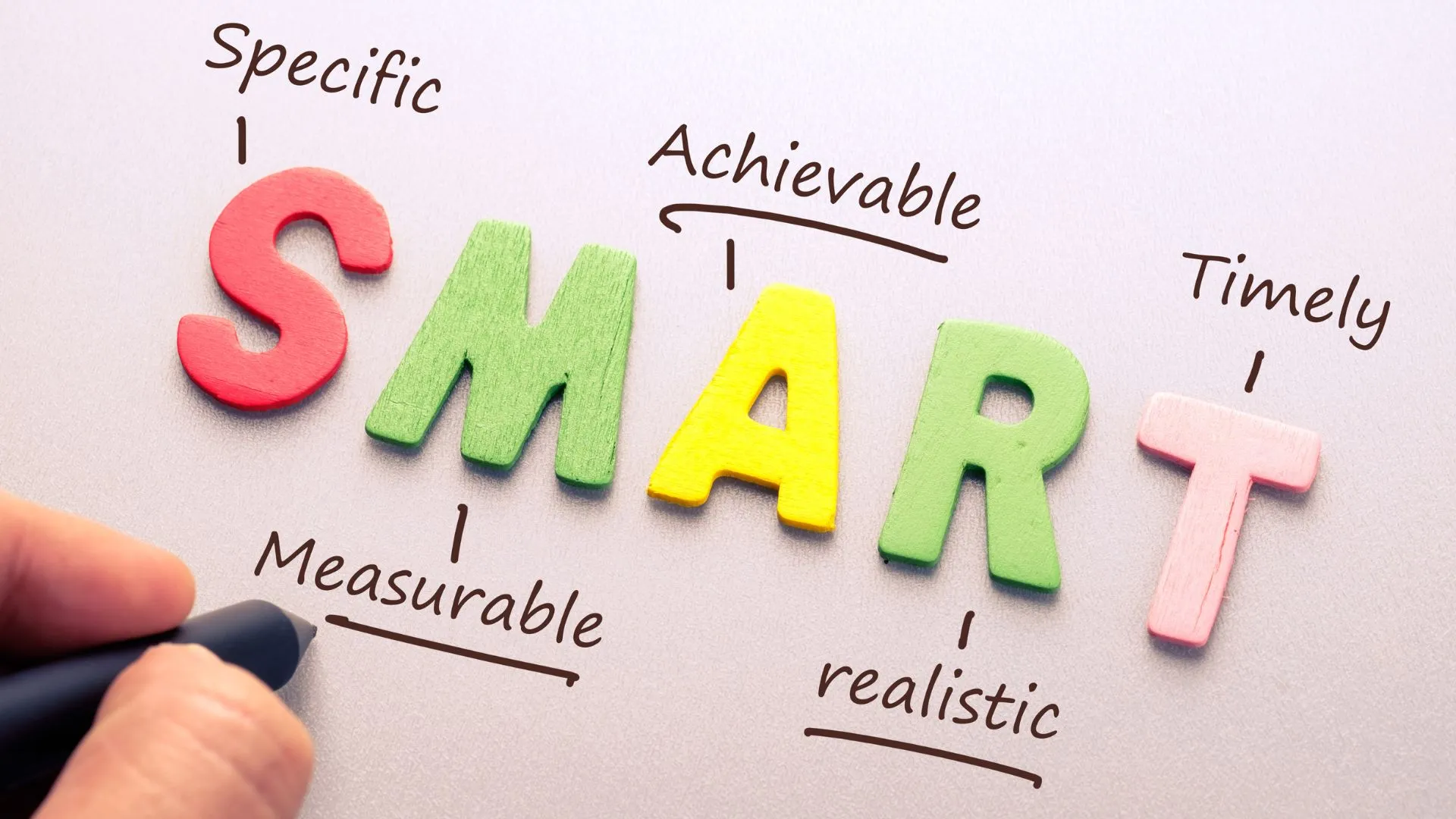
Setting S.M.A.R.T Goals
Start by setting smart, measurable goals, such as increasing followers by 20% within three months or achieving 50 sales per month through the platforms. Don’t move without direction; your goals need to be clear and strong so you can plan properly.
The Meaning of S.M.A.R.T
Smart goals (S.M.A.R.T.) are a set of goals with clear, specific criteria you commit to. These 5 rules change the framework of the plan you follow and how you execute it, simply because they are specific goals.
- S stands for “Specific,” meaning a well-defined, known goal, not “I want to increase page engagement,” but rather “I want to increase page followers and audience comments.”
- M stands for Measurable, a goal that can be measured “I want to increase page followers to 100,000 followers,” not leaving the number open but setting a goal I can express in numbers.
- “A” stands for “achievable,” meaning the goal is realistically attainable; don’t tell me you’ll turn 10 pounds of ad spend into a million followers. How exactly?
- R stands for Relevance, meaning the goal is connected to your business; don’t say you want more sales when you actually offer services.
- T stands for Time Bound. Tie your goals to a specific timeframe you must achieve them within, or you’ve failed.
Using goals that follow the S.M.A.R.T. framework doesn’t restrict your marketing process; it sets fixed goals you must follow to reach the success your plan aims for.
Analyzing the Audience and Competitors
Before publishing any content, deeply understand your audience: their ages, interests, the challenges they face, and the platforms they spend their time on while analyzing what your competitors do to exploit the gaps they leave behind.
Building a Balanced Content Plan
Adopt the golden 80/20 rule: 80% of content provides real value (educational, entertaining, inspiring), and 20% is direct promotional content. This balance keeps the audience’s interest without overwhelming them with ads.
Social Media Marketing Strategies
The term “social media marketing strategies” refers to a set of plans and techniques companies use to increase visibility, boost engagement, and improve revenue across platforms like Facebook, Twitter, Snapchat, YouTube, and Instagram. The core idea is to leverage each platform in a way that suits its nature and the audience on it, rather than treating them as similar channels.
First: Facebook Marketing Strategies
Facebook remains one of the most important digital marketing platforms, especially in Arab markets, because it combines text and visual content, powerful ads, and integrated stores. Many users make purchase decisions after seeing suitable content or a well-designed ad, making a clear Facebook strategy essential for any business.
1. Paid Advertising Campaigns on Facebook
Facebook ads let you target audiences based on geographic location, age, gender, interests, and behaviors, in addition to retargeting people who’ve interacted with you before. Ads appear in the News Feed, Stories, Messenger, and Marketplace and can be images, videos, carousels, or product collection ads.
Before launching any Facebook ad campaign, you need to define:
- The precisely targeted audience (in terms of location, age, interests, and purchase behavior).
- The advertising objective (visits, messages, purchases, video views, etc.).
- The content type (image, video, carousel, limited offer, etc.).
- Daily or total budget and campaign duration.
2. Optimizing the Facebook Page as a Brand’s Front Door
The Facebook page is your first point of contact with many customers, so it should be managed as a marketing asset, not just a regular account. Key elements of page optimization include:
- A clear, professional profile picture and logo representing the brand.
- A cover photo reflecting the main offer or the business’s core value.
- A clear call-to-action button like “Book Now,” “Contact Us,” or “Shop Now.”
- Complete contact information: website, phone number, email, and address.
- A pinned post containing a strong offer or a brief description of the service.
- Choosing an accurate business category that correctly describes your activity.
- A custom, easy-to-read username that’s easy to share with others.
3. Using Groups and Reels to Boost Engagement
Facebook groups help build a community around the brand, whether it’s a group for nursery mothers, beauty center customers, or students of an educational center. These groups can be used to share exclusive content, answer questions, and announce new offers in a closer, more personal way.
Reels, on the other hand, give you a great opportunity for free reach with short, engaging content. They can be used to show before/after results, quick glimpses of services, short tips, or time-limited offers, significantly boosting reach and engagement rates.
Second: Twitter (X) Marketing Strategies
Twitter/X is a powerful platform for breaking news, public opinion, and short, direct content, making it suitable for brands that want to be part of the daily conversation and trends, especially in the Gulf and markets interested in public discussions.
1. Paid Ads on Twitter/X
Ads on Twitter/X can be text tweets, images, or videos appearing in the Timeline as if they were regular tweets, but with wider reach and specific targeting. As with Facebook, you need to define the audience, goal, content type, and budget before launching.
2. Real-Time Participation in Events and Trends
Twitter/X’s real power lies in its real-time nature; your strategy should therefore rely on sharing news and trending topics, commenting on events related to your field, and participating in conversations with the audience using relevant hashtags. Tweets should be short, clear, and contain value, an opinion, information, or a smart joke.
3. Using Hashtags and Influencer Partnerships
Hashtags make content easier to discover, so it’s important to use tags related to your service or audience and sometimes create a hashtag specific to a campaign or brand and encourage the audience to use it. You can also collaborate with influencers in your field to promote campaigns or new launches through tweets or shared tweet threads.
Third: Snapchat Marketing Strategies
Snapchat is an ideal platform for reaching teenagers and young people, especially in the Gulf, where daily use is widespread. The temporary, fast-paced nature of the content makes it suitable for brands wanting to share daily moments, limited-time offers, and light interactive experiences.
1. Creating Authentic, Fast-Paced Content
On Snapchat, content doesn’t live long; it should therefore be natural, simple, and close to the audience’s daily life. You can share behind-the-scenes moments, order preparation, customer reception, or even live reactions, using lenses, filters, and stickers to boost appeal.
2. Exclusive, Time-Limited Promotional Offers
Snapchat is very suitable for quick offers like “24-hour discount” or “gifts for the first 10 customers,” because the nature of the platform itself encourages a sense of urgency. This type of offer pushes users to take quick action for fear of missing the opportunity.
3. Paid Ads and Targeting the Right Audience
Snapchat ads allow targeting users by age, geographic location, interests, and platform behavior, making it suitable for brands targeting a specific young demographic. Short vertical video ads can be used to showcase services like restaurants, beauty centers, or entertainment events in an appealing way.
Fourth: YouTube Marketing Strategies
YouTube is no longer just a platform for watching videos; it has become an important engine for discovering products and services and making purchase decisions, especially with the spread of tutorial videos, reviews, and usage experiences.
1. Producing High-Quality, Useful Video Content
Since YouTube is fundamentally a video platform, your strategy should revolve around producing videos that add real value to the audience, such as:
- Tutorials on using products and services.
- Real customer reviews and experiences.
- Educational content in your field (beauty, education, cooking, etc.).
- Solutions to common problems your audience faces.
Attention must be paid to filming quality, audio, lighting, and video formatting, in addition to optimizing it to appear in search (clear titles, keyword-rich descriptions, appropriate tags, and an attractive thumbnail).
2. Collaborating with Content Creators and Influencers
Collaborating with established channels that have a target audience close to yours is one of the most powerful ways to increase reach and credibility. You can organize joint episodes, paid reviews, or content showing the influencer genuinely using and talking about the product or service.
3. Engaging with the Community and Encouraging Participation
YouTube is also a community, so you should respond to comments, encourage questions, run simple contests, and use the Community tab to publish posts, images, and polls between videos to build an ongoing relationship with followers.
4. Using YouTube Ads Wisely
YouTube ads can appear before, during, or after a video and may be skippable or non-skippable, in addition to banner ads on the page or within the video itself. The success of these ads depends on understanding the audience, crafting a strong message in the first few seconds, and connecting the ad to a strong landing page or a specific offer.
Fifth: Instagram Marketing Strategies
Instagram is a visual platform par excellence, very powerful for brands relying on images and short video such as fashion, beauty, restaurants, nurseries, and educational and entertainment projects. Instagram’s strength lies in Stories, Reels, and carousels.
1. Visual Stories and Reels
Instagram content should revolve around high-quality images and videos that showcase the product or service appealingly within the context of daily life. Stories can be used daily to show behind-the-scenes moments, make quick offers, or remind the audience of appointments and deals, while Reels are used to increase reach through before/after content, short tips, or brand-related entertaining content.
2. Influencer Marketing on Instagram
Collaborating with influencers on Instagram is one of the most effective ways to reach a target audience, especially in beauty, fashion, and fitness fields. The idea of the audience seeing the influencer using the product in their daily life or talking about it naturally gives credibility and pushes many people to try it.
3. Encouraging User-Generated Content (UGC)
Inviting customers to share their photos and experiences with your products or services, then reposting this content on your account, gives a strong sense of trust and authenticity. This can be encouraged through contests, simple gifts, or discounts in exchange for sharing photos and usage experiences.
4. Paid Ads on Instagram
Instagram offers multiple ad types: images, videos, carousels, stories, and ads in the “Explore” tab. You can target the audience by age, gender, interests, location, and even previous interaction with your account. Connecting these ads to ad management sessions ensures the ad budget is used optimally and converts views into visits, messages, and sales.
How to Create a Social Media Marketing Strategy
Creating an effective social media marketing strategy means having a clear plan: Who are you talking to? What do you want to achieve? What will you post? When will you post it? And how will you measure results? These elements are what transform your social media presence from a random activity into an integrated system that supports your business’s growth in the short and long term.
1. Precisely Choosing the Target Market and Audience
The right starting point for any digital marketing strategy is understanding the market and target audience. It’s not enough to say “I target young people” or “I target mothers”; you need to draw a clear picture of the ideal customer (buyer persona) by answering questions such as
- What’s the main age group you’re targeting?
- Where do they live? In which city or country?
- What’s their income level and the nature of their jobs generally?
- What’s the biggest problem they currently face regarding the service or product?
- What solution do you offer that’s different from competitors?
- What type of content do they prefer (short video, images, tutorials, stories, live streams)?
- Which platforms do they spend most of their time on? And when are they most active?
Answering these questions helps you choose the most suitable platforms (like Instagram, Facebook, TikTok, and LinkedIn) and determine the tone of voice, content language, and the nature of the offers that will appear to them. This is where it becomes important to leverage market research and analysis services to gather real data about your audience instead of relying on guesswork.

2. Setting Smart Marketing Goals Connected to the Business
After understanding the audience, the next step is setting the marketing goals the strategy will be built on. These goals should be:
- Specific and clear (e.g., increasing visits to the booking site by 30% within 3 months).
- Measurable (trackable through numbers and reports).
- Directly connected to business goals (sales, bookings, registrations, inquiries).
- Achievable given your current resources and budget.
- Bound by a clear timeframe (month, quarter, year).
Examples of common social media goals: building brand awareness, improving brand image, driving traffic to the site, increasing messages and inquiries, or boosting sales during certain seasons. Connecting these goals to social media management services ensures that every post and every campaign serves a clear goal, not just “posting for the sake of posting.”
3. Developing Engaging Content Built on Clear Pillars
At this stage, understanding of the audience and goals is turned into a practical content plan. The best approach is defining content pillars such as
- Educational content explaining the solution and its features.
- Trust content: customer reviews, before/after, case studies.
- Promotional content: offers, discounts, packages.
- Interactive content: questions, contests, polls.
- Behind-the-scenes content: the team, the execution process, preparations before delivering the service.
For each pillar, define the most suitable formats: still images, short videos (Reels/Shorts), explanatory carousels, quick stories, live streams, etc. It’s important that the content be
- Consistent with the brand identity in terms of colors, fonts, and writing style.
- High-quality visually (professional photography or strong designs).
- Built on a clear message and a specific call to action.
Here, content creation services integrate with photography and video and visual identity design to build engaging, impactful content that professionally expresses the brand.
4. Creating a Posting Schedule and Content Distribution
Without a clear publishing plan, even the best content will lose its impact. That’s why it’s essential to prepare a posting schedule that defines the following:
- The number of weekly posts per platform (e.g., 3–5 weekly posts on Instagram, 3–7 weekly posts on Facebook, and one weekly video on YouTube).
- Ideal posting times based on the audience’s active hours.
- Distributing content types across days (e.g., one day for education, one for trust, one for offers, one for interaction).
- A plan for Stories and Reels, as they are powerful elements for engagement and visibility.

5. Effective Engagement and Building a Community Around the Brand
Social media isn’t a “one-way” channel; it’s a space for dialogue. Your strategy should therefore include a clear engagement plan that covers:
- Quick responses to comments and private messages.
- Providing detailed answers to frequently asked questions.
- Using stories, polls, and contests to increase participation.
- Celebrating supportive customers and sharing their positive experiences.
- Participating in discussions and hashtags related to your field of work.
This part often consumes daily time, which is why the task of managing daily engagement is assigned to a social media management team, to ensure the brand is present and responds professionally and consistently with its identity.
6. Monitoring Results and Analyzing Performance with Data
So the strategy doesn’t remain merely a “theoretical plan”; you must regularly track key performance indicators (KPIs), such as
- Monthly growth of real followers.
- Reach and impression rates.
- Engagement rate compared to number of followers and posts.
- Number of messages and inquiries coming from social platforms.
- Number of site visits or booking page visits from social media.
- Number of orders, bookings, or sales linked to specific campaigns.
Platform analytics themselves are used alongside digital ad campaign reports and market analysis results to form a clear picture of what’s working well and what needs improvement, rather than relying solely on personal impressions.
7. Continuously Refining and Developing the Strategy
A strong strategy isn’t static; it’s continually updated based on results and changes in the market and platforms. Your plan should therefore include a periodic review (monthly or quarterly) covering:
- Analyzing the best- and worst-performing posts and why.
- Reviewing which platforms are most worthwhile relative to time and budget.
- Updating content pillars to match what currently matters to the audience.
- Adjusting the posting schedule and engagement times if audience behaviors change.
- Trying new types of content such as live streams or deeper interactive content.
Professional social media management teams treat the strategy as a living document that’s constantly updated, not a fixed document written once and forgotten, which is what ensures continued growth and improving results over time.
When Do You Need Professional Support in Building Your Strategy?
If you’re a business owner managing several platforms at once or working in a competitive industry like fashion, beauty centers, or nurseries, you’ll likely need a specialized team that designs, implements, and analyzes a complete strategy for you instead of wasting your time on trial and error.
A Practical Example: A Social Media Marketing Strategy for a Nursery
Suppose you own a nursery in Cairo targeting parents aged 25 to 40, and you want to use social media to increase bookings and improve the nursery’s image. How can the previous steps be applied practically?
1. Defining the Audience and Suitable Platforms
- Primary audience: mothers and fathers in areas close to the nursery (e.g., Maadi, Basatin, Zahraa Al Maadi), who care about early education quality, safety, cleanliness, and educational activities.
- Best platforms: Facebook and Instagram are essential for showing photos, videos, and daily stories, with the possibility of using WhatsApp as a direct communication channel for bookings and inquiries.
2. Setting Marketing Goals
Goals can be formulated as follows:
- Increasing booking inquiries via messages by 30% within 3 months.
- Raising the visit rate to the nursery’s website page or registration form from Facebook and Instagram.
- Building a strong image of the nursery as a safe, educational, and enjoyable environment for children.
3. Designing a Content Plan Suited to Parents
Content pillars for the nursery could be the following:
- Educational content: parenting tips for mothers, the importance of early education, ways to develop skills.
- Trust content: short videos from inside classrooms, photos of cleanliness and organization, parent reviews.
- Promotional content: early registration offers, sibling discounts, and flexible monthly packages.
- Behind-the-scenes content: activity preparations, event celebrations, teachers interacting with children.
- Interactive content: questions for mothers about parenting challenges, polls about favorite activities, simple contests for kids.
4. A Practical Posting Schedule for the Nursery
The posting schedule could look like this:
- 3 weekly posts on Facebook (photos + short videos from the school day).
- 3–4 weekly posts on Instagram (Reels + carousel for parenting tips).
- Daily Stories showing sweet moments from the children’s day at the nursery.
With posting times chosen mostly in the evening hours, when parents are more available to use their phones and follow the content.
5. Engaging with Parents
Focus is placed on:
- Fast responses to messages and inquiries about prices, schedules, class sizes, and safety systems.
- Providing reassuring answers to questions like “What happens if a child cries?” How do you handle food allergies?
- Sending additional information and links to the registration form with every serious inquiry.
6. Measuring Results and Improving Performance
Indicators tracked include:
- Number of monthly messages and inquiries from Facebook and Instagram.
- Percentage of people who visited the registration form from social media links.
- Number of children actually enrolled after contact via the platforms.
- The highest-engagement posts and why the audience loved them most.
7. Developing the Strategy Based on What the Audience Loves
If you notice the audience engages more with videos of children’s active activities, you can increase this type of content. And if most questions revolve around safety and cleanliness, you can produce content dedicated to this aspect (filmed tours inside the nursery, explaining safety systems, and drop-off and pick-up policies).
This way, the nursery’s social media marketing strategy becomes practical and clear, and the platforms transform from a mere photo gallery into a real channel for attracting parents and building long-term trust with them.
Social Media Management Tools Every Marketer Needs
Don’t think digital marketing is a purely manual process that relies solely on your own thinking; there are many tools that help marketers get their work done. Using these tools will save you a significant amount of time, whether in analytics or research, and so on. There’s no substitute for genuine work in any case, but as I said, the tools help.
- Hootsuite: One of the oldest and most famous social media management tools, allowing post scheduling with detailed performance reports
- Buffer: A simple, effective tool that helps schedule posts, manage content, and analyze performance
- Canva: Indispensable for designing engaging visual content thanks to its wide variety of templates tailored for social media
- Meta Business Suite: A free, powerful solution for managing Facebook and Instagram pages from one place
Social Media Advertising
Alongside organic content, all social media platforms offer powerful paid advertising systems allowing precise targeting based on geographic location, interests, and purchase behavior. Organic content builds community over the long term, while paid ads accelerate growth and produce immediate results.
Meta Ads
Under one banner, Facebook and Instagram ads unite through the Meta Ads Manager. The idea behind Meta ads is that they achieve the fastest and widest audience reach, thanks to the tremendous popularity these combined platforms enjoy. Targeting ads on Meta helps you easily reach a large, diverse segment of your target audience across the appropriate age groups, thanks to a massive database covering all your needs, especially with useful AI-powered features that some find helpful in building ads.
TikTok Ads
As for TikTok, it’s the youth-oriented platform, making it easy for you to reach the largest number of young people effortlessly—an excellent platform in the B2C world. TikTok Ads offer unique formats like in-feed ads and Spark Ads that blend the ad seamlessly with the platform’s natural content and work with high efficiency with the young audience.
The success of any advertising campaign on these platforms requires a deep understanding of each platform’s tools, setting a clear budget, and continuous testing of multiple ad versions (A/B testing).
How to Succeed on Social Media: Practical Tips
- Focus on only 2-3 platforms where your audience is present, instead of a weak presence across all platforms.
- Consistency in visual brand identity and tone of voice across all posts.
- Fast responses to comments and messages to build a genuine, interactive relationship with the audience.
- Relying on analytics and metrics to develop content instead of guessing.
- Providing real value to the audience before considering direct promotion, using the 80/20 rule.
- Connecting your social media efforts to a professional website.
Common Mistakes to Avoid
Some of the most common social media marketing mistakes include posting randomly without a clear strategy, neglecting real engagement with your audience, buying fake followers that harm credibility and reach, and ignoring analytics instead of using data to continuously optimize performance.
Drawbacks of Marketing Through Social Media
Despite the great importance of social media marketing, there are some challenges to watch out for to avoid negatively impacting the brand:
- Difficulty controlling negative comments and messages that could affect the company’s image in front of the audience
- Increased working hours required to manage pages and constant interaction, making marketing ineffective if not given enough time
- Sometimes it’s difficult to precisely measure the return on investment due to overlapping factors affecting performance
- Weakened privacy when sharing public content, which could be exploited for online extortion or brand identity theft
- Higher costs in some cases due to the need for multiple paid ads on different platforms to efficiently reach the audience
The ideal solution to overcome these challenges is enlisting a specialized team with real experience in crisis management and precise data analysis, instead of managing accounts randomly without a clear plan.
Frequently Asked Questions About Social Media Marketing
How can you succeed at marketing on social media?
By precisely defining goals and the target audience, choosing the right channels, then creating high-quality content, using paid ads, and directly engaging with the audience, while continuously monitoring performance analysis to improve results.
Should you post daily on every platform?
No, quality always comes before quantity; posting 3-4 times a week with valuable content is far better than random daily posting with no real benefit to the audience.
What is the best platform for digital marketing?
There’s no single platform that’s absolutely the best; the choice depends on the nature of the target audience and the business’s goals. For example, Facebook suits broad targeting, Instagram suits visual products, and LinkedIn suits B2B marketing.
Is social media marketing a substitute for SEO and blogging?
No, it’s part of an integrated marketing system, and it’s always best to support it with a strong blog on the website to improve topical authority and attract additional free traffic from search engines.
Conclusion
Marketing through social media is no longer an optional choice but a fundamental pillar for any brand’s success in 2026, starting with understanding the meaning of digital marketing, moving through choosing the right platforms like Facebook, Instagram, and LinkedIn, and reaching mastery of paid ads and building a balanced content strategy that’s aware of its challenges as much as its opportunities. If you’re looking for a partner to handle this task entirely on your behalf, contact the Tiye Solutions team today to get a customized social media strategy for your business.